 Langue
 English
 français
 Deutsch
 русский
 español
 português


Qu\'est-ce que tu cherches?

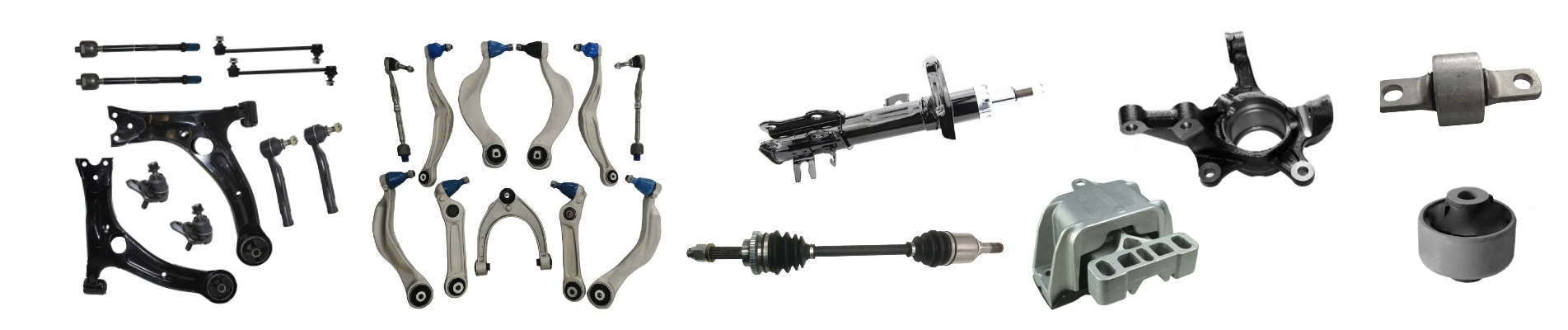
bras de suspension Les pièces sont des composants essentiels d'une voiture. système de suspension Les bras de suspension relient le châssis ou le sous-châssis au moyeu de roue. Ils jouent un rôle essentiel dans le maintien de l'alignement des roues, l'absorption des vibrations de la route et la stabilité de la tenue de route. Le choix entre bras de suspension réglables et fixes dépend de l'utilisation de votre véhicule, de vos besoins en modifications et de votre budget. Vous trouverez ci-dessous un tableau comparatif détaillé pour vous aider à faire un choix éclairé.
Les bras de suspension fixes sont montés de série sur la plupart des voitures particulières, SUV et monospaces de série. Ils sont conçus pour les trajets quotidiens, l'usage familial et les conditions routières normales où la stabilité et la fiabilité sont primordiales. Si vous modifiez rarement votre véhicule, roulez principalement sur routes goudronnées et n'avez besoin que d'une suspension performante, les bras de suspension fixes sont parfaitement adaptés.
bras de commande réglable Les bras de suspension réglables, en revanche, sont conçus pour les véhicules modifiés, la conduite sportive ou le tout-terrain. Ils sont idéaux pour les propriétaires de voitures ayant abaissé ou surélevé leur véhicule, installé des roues/pneus plus grands ou recherchant une meilleure tenue de route sur circuit. Les amateurs de tout-terrain apprécient également les bras réglables, car ils permettent un ajustement précis pour s'adapter aux terrains accidentés et maintenir un alignement optimal après la surélévation.
Le principal avantage des bras de suspension fixes réside dans leur prix abordable et leur simplicité. Fabriqués en série, ils sont moins coûteux à produire et à remplacer, ce qui les rend économiques pour une utilisation quotidienne. Leur conception monobloc et non réglable réduit également le nombre de pièces mobiles, limitant ainsi les risques d'usure, de desserrage ou de panne. Ils nécessitent un entretien minimal et peuvent durer toute la vie du véhicule, à condition de ne pas être endommagés par des collisions ou une utilisation intensive.
Cependant, leur rigidité constitue un inconvénient majeur. Une fois installés, il est impossible de régler leur longueur ou leur angle, ce qui pose problème en cas de modification du véhicule. Abaisser ou rehausser la voiture peut en effet déséquilibrer le parallélisme, entraînant une usure irrégulière des pneus, une tenue de route dégradée et une surconsommation de carburant. De plus, les bras fixes ne compensent pas l'usure d'autres composants de la suspension, tels que les silentblocs ou les rotules, qui peuvent affecter le parallélisme à terme.
Les bras de suspension réglables offrent une flexibilité inégalée. Ils permettent un réglage précis du carrossage, de la chasse et du pincement, des paramètres essentiels pour un alignement optimal après modifications. Ceci prévient l'usure irrégulière des pneus et améliore la précision de la tenue de route, notamment à haute vitesse et en virage. Sur les véhicules tout-terrain, les bras réglables s'adaptent à différentes hauteurs de caisse, assurant un contact optimal des pneus avec le sol.
En revanche, les bras de suspension réglables sont plus chers que les bras fixes, coûtant souvent deux à trois fois plus. Ils comportent également davantage de pièces mobiles, comme les boulons de réglage et les contre-écrous, qui nécessitent un contrôle et un resserrage réguliers pour éviter tout desserrage. Un mauvais réglage peut s'avérer plus néfaste que bénéfique, entraînant une tenue de route dégradée, voire une défaillance de la suspension. De plus, leur complexité engendre des coûts d'entretien plus élevés à long terme.
Pour les véhicules non modifiés utilisés quotidiennement : privilégiez les bras de suspension fixes. Fiables et économiques, ils ne nécessitent aucun effort supplémentaire. Lors de leur remplacement, choisissez des pièces d'origine ou des pièces de rechange de haute qualité, compatibles avec la marque et le modèle de votre véhicule, afin de garantir leur compatibilité et leurs performances. Inspectez-les annuellement afin de détecter tout signe de dommage, comme une déformation, de la rouille ou une usure des silentblocs, et remplacez-les rapidement si nécessaire.
Pour les amateurs de tout-terrain : choisissez des bras de suspension réglables conçus pour une utilisation hors route, avec des caractéristiques telles qu’une construction robuste et une grande amplitude de réglage. Adaptez-les au terrain : allongez-les pour les véhicules surélevés afin de préserver l’alignement, ou ajustez-les pour améliorer la garde au sol. Nettoyez et lubrifiez régulièrement les mécanismes de réglage pour prévenir la rouille et garantir un fonctionnement optimal.

PRÊT POUR UN ABONNEMENT ?
Société SMK fournir des pièces automobiles pour ci-dessous pièces détachées automobiles : Voiture japonaise : Toyota, Honda, Nissan, Mazda, Subaru, Mitsubishi, Suzuki, Isuzu ... Voiture européenne : BMW, Benz, VW, Audi, Skoda, Porsche, Maserati, Renault, Peugeot , Citroën, Fiat, Opel, Land Rover ... Voiture américaine : Tesla, Ford, Chrysler , Cadillac , Buick , GMC, Chevrolet, Lincoln, Fiat, Dodge, ... Voiture coréenne : Hyundai, Kia, Daewoo ... Voiture chinoise : Chery, Geely, GreatWall, Haval, BYD, Changan, JAC... Nous fournissons des pièces dans le monde entier : USA, Canada, Europe, Mexique, Colombie, Corée... Nous sommes un fournisseur leader pour les pièces automobiles ci-dessous : Pièces de suspension et de direction (bras de suspension, biellette de direction, biellette de stabilisation...) Tesla Pièces de rechange P arts. Moteur M comptage/transmission M compte SMK Auto parties est spécialement conçu pour la réparation automobile parties Nos composants de châssis sont soumis à des tests rigoureux pour résister aux conditions routières et climatiques complexes et variables. Nos produits offrent non seulement une durabilité exceptionnelle, mais aussi une large compatibilité et une excellente stabilité, garantissant un support fiable et durable à vos véhicules. De nombreux clients étrangers ont établi avec nous des partenariats durables. Grâce à l'augmentation constante de nos ressources, de nombreux clients internationaux nous confient la production de divers types de pièces automobiles. Afin de répondre à leurs besoins diversifiés, nous avons activement développé de nouvelles gammes de produits. Nous adhérons à des normes de fabrication strictes, garantissant que chaque produit répond aux exigences strictes de sécurité et de durabilité des différents marchés. Nous invitons nos clients du monde entier à choisir nos produits et à améliorer la protection et les performances de leurs véhicules ! SMK privilégie toujours le client, améliore continuellement la qualité de ses produits et le niveau de service, et s'efforce de créer davantage de valeur pour ses clients internationaux. À l'avenir, nous continuerons d'adhérer au principe « qualité avant tout, client avant tout » et travaillerons main dans la main avec nos partenaires pour bâtir un avenir meilleur.
 Réseau IPv6 pris en charge